


Resch H, Pietschmann P, Krexner E, Willvonseder R.
Medical Department, Krankenhaus der Barmherzigen Bruder, Vienna, Austria.
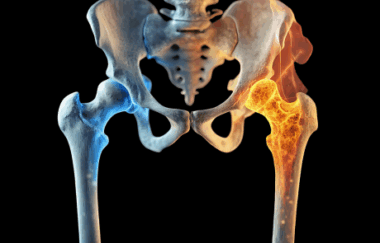
In experimental and clinical studies, conflicting results regarding the effect of oral anticoagulant therapy on bone metabolism have been reported. To measure a possible influence of long-term anticoagulant therapy with phenprocoumon on peripheral bone mass, measurements of peripheral bone mineral content (BMC) and serum osteocalcin levels were performed with single photon absorptiometry in a total of 78 patients on anticoagulant treatment. We studied 43 women (mean age 66 years +/- 2 SEM) and 35 men (mean age 65 years +/- 2 SEM) with a median duration of phenprocoumon therapy of 1 year (1-9 years). In all patients, the medical history gave no symptoms of metabolic bone disease, or diseases or medications causing osteoporosis. Both in the male and female groups, mean peripheral BMC was significantly decreased (male: P less than 0.01, female: P less than 0.003) when compared with corresponding controls. Serum OC-levels measured in 16 patients were also significantly lower than those of the controls (P less than 0.02). Our data of decreased BMC and low serum OC-levels indicate reduced bone mass in patients on long-term anticoagulant therapy with phenprocoumon. This may imply an influence of anticoagulants on bone metabolism resulting in decreased bone formation.
והמאמר השני:
1: J Clin Endocrinol Metab. 1988 May;66(5):1071-4 Decreased serum osteocalcin levels in phenprocoumon-treated patients. Department of Internal Medicine II, University of Vienna, Austria. Osteocalcin (OC) is a noncollagenous bone matrix protein containing gamma-carboxyglutamic acid, the synthesis of which is vitamin K dependent. Serum OC levels are generally believed to reflect the de novo synthesis of OC by osteoblasts and thus reflect bone formation. We measured serum OC levels by RIA in 48 patients receiving phenprocoumon anticoagulant treatment, which inhibits the posttranscriptional synthesis of gamma-carboxyglutamic acid, and in 22 matched normal subjects. The median serum OC level in the patients receiving phenprocoumon therapy was significantly lower than that in the normal subjects (P less than 0.0001). In 27 patients receiving anticoagulant therapy and in 21 normal subjects the proportion of noncarboxylated OC to total OC also was determined. The proportion of OC that was noncarboxylated was significantly higher in the patients receiving phenprocoumon therapy than in the normal subjects (P less than 0.0001). We conclude that OC carboxylation is impaired in patients receiving oral anticoagulant therapy. The decreased total OC levels in patients receiving phenprocoumon treatment might result from decreased bone formation, although these patients do not have symptoms of bone disease.
Pietschmann P, Woloszczuk W, Panzer S, Kyrle P, Smolen J.





תגובות רוצה להצטרף לדיון?
יש להתחבר כדי להגיב.
התחבראין תגובות עדיין. היה הראשון להגיב!