


מתוך medicontext.co.il
By Karla Gale
WESTPORT, CT (Reuters Health) – Early recognition of tic disorders in children might lead to better academic performance and social and emotional development, investigators report in the October 23rd issue of Neurology.
"Children with Tourette's disorder and related tic disorders commonly have school problems, such as attention deficit disorder, handwriting problems, and learning disabilities, which make progress in school challenging for them," Dr. Roger Kurlan told Reuters Health.
He added that tic disorders weren't recognized as a potential contributor to problems children were having "until it became clear, largely from genetic studies, that tic disorders are much more common than people had anticipated in the past." Before that, tic disorders often remained undiagnosed when they were extremely mild and parents did not bring them to the attention of physicians, he said.
Between 1994 and 1998, Dr. Kurlan, of the University of Rochester School of Medicine and Dentistry, and associates evaluated 1596 students, ages 8.5 to 17.5 years, from 10 schools in the Rochester, New York, area that enrolled both regular education and special education students. The investigators found that among 341 children in special education classes, the weighted prevalence estimate for tic disorder was 23.4%; the corresponding estimate for regular education students was 18.5%.
Dr. Kurlan and his associates diagnosed 7.0% of special education students and 3.8% of regular education students as having Tourette's syndrome according to criteria of the upcoming revised DSM-IV (a significant difference, p = 0.01).
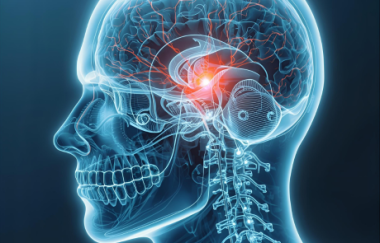
"Tics, then, may represent an observable sign of an underlying disturbance of basal ganglia development, which in turn can lead to obsessive-compulsive disorder, attention deficit-hyperactivity disorder, and other neuropsychological impairments that can interfere with successful academic progress," the research team writes.
"We're not saying that you necessarily need to treat tics," Dr. Kurlan pointed out. "In fact, the tics may not be the issue at all. Rather, the presence of tics is probably an observable sign of subtle underlying brain developmental dysfunction."
If tics become established as a valid predictor for students who will develop academic difficulties, the investigators suggest that training physicians, teachers, and parents to recognize tics could lead to earlier intervention and careful monitoring.

תגובות רוצה להצטרף לדיון?
יש להתחבר כדי להגיב.
התחבראין תגובות עדיין. היה הראשון להגיב!